This website is not endorced by Wipers or Greg Sage!
None of the photos on this website are mine, unless otherwise noted.
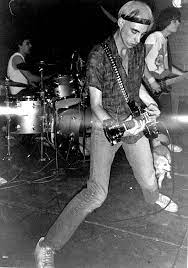
Wipers were an 80s punk rock band from Portland, Oregon fronted by my personal favorite guitarist of all time- Greg Sage. Most people who will read this are most likely familiar with the story. to quote the Official Wipers Website "The Wipers formed in late 1978. Greg Sage said that the idea for the name came from when he worked at a movie theater that had a long hallway of glass that looked over the city of Portland, Oregon. One of his jobs was to clean the glass that would get cloudy from people waiting to enter the theaters. When wiping the glass with a large squeegee, the view of the city would become crystal clear. A “crystal clear view” was the idea he wanted to put into music. The Wipers and Greg Sage went on to record 12 albums and several EP’s. Greg’s original idea was to never tour or do interviews, to be mysterious and let listeners have their own ideas. This original idea was not as possible as he hoped, due to the demands of working in the music industry. Even though staying independent throughout his career there were certain rules in the music world he could not bend. Greg would go on to build some of the equipment used to record the albums creating their distinct sound." I plan on documenting their sound to the best of my ability in order of release. Almost all of this is speculatory.
(skip to the end of the page for why you should trust me/who I am)
---------------------
General Gear Overview
Sage's most used amp was an Ampeg Gemini I, and his guitar was a vintage Gibson SG from 1969 with two classic P-90s. In the early days, Greg used a MXR Distortion+ for all the gain-y parts, although later he wound up using his own homemade tube operated distortion pedal, and a Maestro Echoplex EP3.
Greg is also noted as hating "newer" Marshalls, I.E: Plexi's or a JCM800's, saying they lacked low end and power that older tube amps often had.
In terms of tone, you want your settings to have moderate to high treble and lower bass and very low to no mids, since the Gemini I G-12 doesn't have any midrange knob. when it comes to distortion, I found my MXR M78 can get quite close to the tone of the first few Wipers records by putting the gain anywhere between slightly over 9 o'clock to 3 o'clock and having the tone at 11. Think of any tone up to 'This Time' off of 'Over The Edge' and it can probably do it, it can also get very close to the live tones. I plan on buying an MXR Distortion+ so I can accurately give a dead-set tone for it.
A lot of people hear a subtle chorus on their first few albums, I personally think this is a product of either the tape they used, a faulty tube, or the built-in vibrato on the Gemini I, most likely a combination of a natural tape flanger and the built-in vibrato, as Greg Sage never owned a chorus pedal, as far as I'm aware.
I will be using my Ampeg Gemini I for everything, as I don't have any other of his amps.
---------------------
Playing Technique
Greg played with mostly downstrokes. A few people I've met claim he exclusively used downstrokes, although I will denounce this theory. Although the majority of his songs are consistently played with downstrokes to create this tense, moody, urgent feeling, he would sometimes use an upstroke for flavor, moreso in the last few albums. He played with his hand on riding the bridge, as in resting his palm on the strings behind the bridge.
---------------------
DISCLAIMER:
I am still figuring out the tones for each release, this website is almost always evolving so if what I write doesn't sound quite right, check in with me on instagram @irishyphema
---------------------
BETTER OFF DEAD EP (1979)
Amp tone: Volume: 1-2 o'clock Treb: on bright Bass: all the way
Distortion (MXR DISTORTION+) Output: Full Gain: 0
The first EP (Better Off Dead) will be hard to accurately estimate the equipment Greg Sage used, as it's hard to find accurate information of even their most accessible material. I recently came across a photo of him with a lefty Fender Stratocaster, from (what I assume) 1963, I'm guessing this for the simple reason that Greg is well known amongst fans to be a huge fan of Jimi Hendrix (Greg is right handed but learned lefty because of his admiration for Jimi), and this would be the same model as the sunburst Stratocaster that Hendrix used, although made for left handed players, as opposed to right handed, as Hendrix would have. I have 0 clue when this was taken, although it would be safe to guess it was while he was still the guitarist for the late American NWA Wrestler Beauregarde, I personally think he may have used this guitar or his Gibson SG for the recording of Better Off Dead. Greg has said the original tapes- which later became the demos for 'Is This Real?'- were recorded on a 4-track. In an old interview with TapeOp (you gotta use the wayback machine, cause I guess no one cares about preservation anymore), he's quoted as saying "Yeah. I think the first tape machine I had was a four track Tascam and a small eight channel mixing board." One can assume he most likely used the same thing to record Better Off Dead. I assume this was a Tascam 70-4 (as it'd be era accurate) and any 8-band EQ system will work. (he was very non-descriptive on the EQ board) for amplification (judging by the picture) was either an old Marshall cab or his trusty Ampeg Gemini I(get used to hearing about this brand of amplifiers) Greg is known for his disdain for Marshalls (I don't blame him) so I'd guess he used the Ampeg. He most likely used 1960’s tube “Telefunken ELA M 251 E” condenser microphones for the guitar and vocals. (source). This EP is more grainy than their other stuff. The same idea here applies to the 'Is This Real?' demos that they recorded before the studio edition.
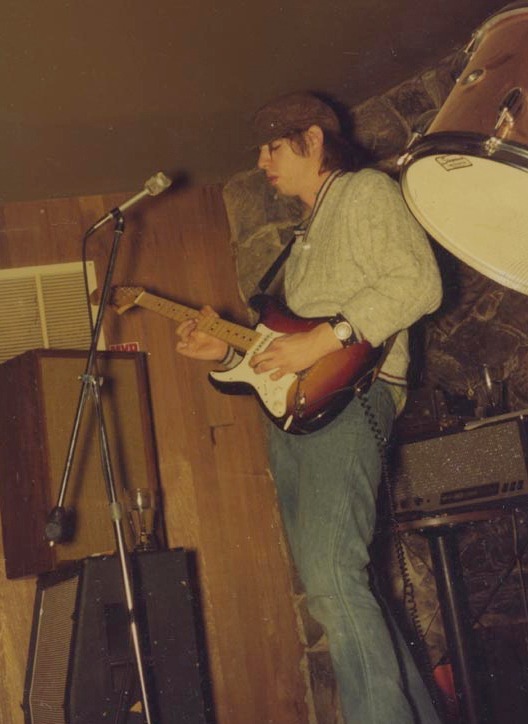
(Above) Greg Sage with a stratocaster circa '71
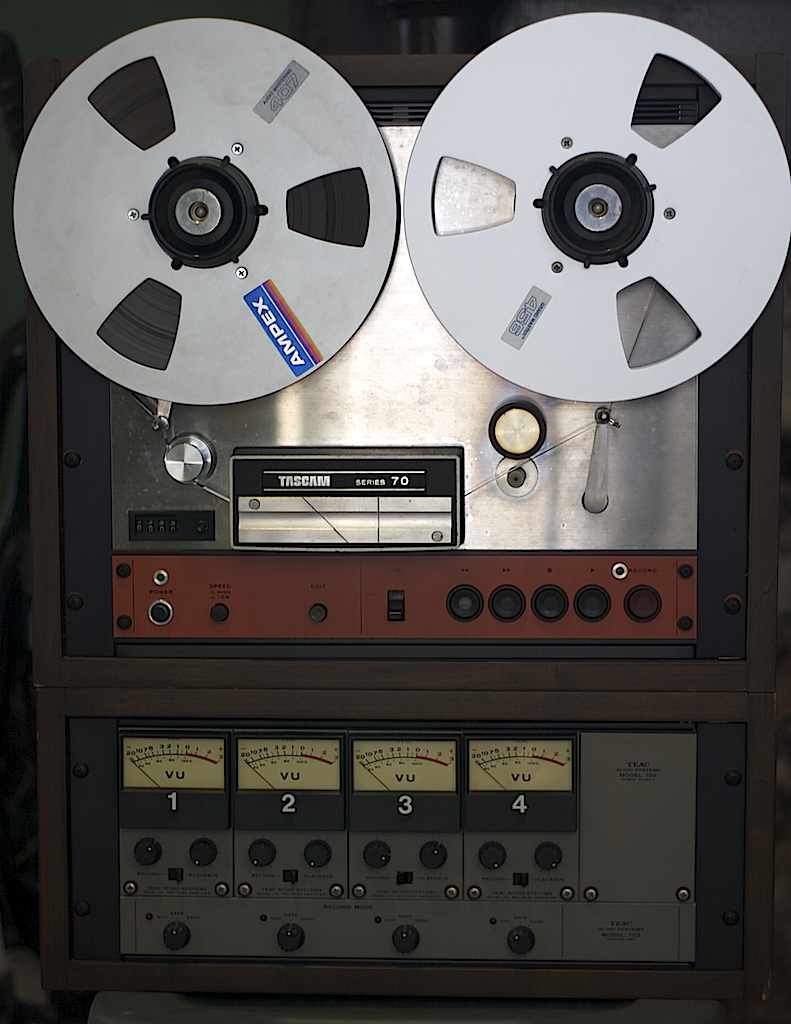
(Above) Tascam 70-4 (Not Sage's)
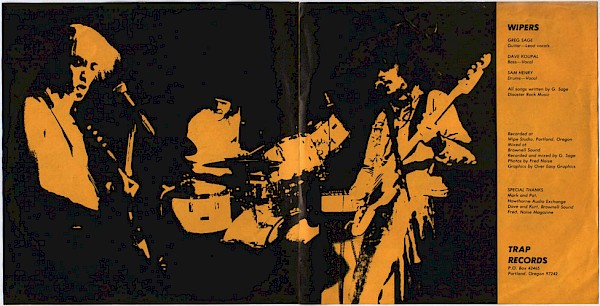
(Above) Better Off Dead 7-inch linernotes.
---------------------
Is This Real? LP (1980)/Alien Boy EP(1980)
This entry may be the easiest, as it is well documented (for Greg Sage standards, at least). Greg Sage used his '69 Gibson SG (source on the year "Greg Sage With 1969 Gibson SG") with Soapbar P-90s running into a MXR Distortion +, running into an Ampeg Gemini I. After this, there's some guess work. I would try to reach out to Bob Stoutenberg (the guy who recorded it) and ask, although I can't find any way to contact him and I'm not sure if he's alive anymore. I have reached out directly to Greg Sage to ask questions, although this endeavor was proven to be fruitless. He used the same Telefunken ELA M251 E mics to record the album, and I assume he used them quite often for recording as they're great microphones. I would guess it was recorded on a 16 track tape recorder.
AND!!! his ever-trusty Tape delay: the Maestro Echoplex EP3. Now this box, let me tell you, is incredible. The sound this huge box makes is the best delay I have ever heard. According to one post on reddit "Greg had several of these and besides the Distortion+ it was the only "effect" he ever used. It is, with no doubt, the key to his guitar sound and style. Without it, he would be missing his natural "huge" solo sound and his ambient guitar playing would be at a miss. His Echoplexes were early solid-state models that he modified to accomidate a footswitch." The last part is inaccurate, as the EP3 already has a footswitch plugin. An image with it in the studio will be supplied in the Over The Edge segment of this page.
There are photos of him during the production of "Over The Edge" where he has it. It's not used to the same extent here as it is in every Wipers album past this point, this was used more to push a fuller sound.
It's reasonable to suspect Sage had an Echoplex as early as 1971/72, as it would be time appropriate and would fit in with the sound of Beauregard
Alien Boy EP was originally outtakes for 'Is This Real?'. This Tone is a bit more echo-y, although this EP was produced better and the echo was standard tape echo that happens accidentally or the built in tube echo that the Gemini I has, although I've tried to replicate this with my Gemini and it's not even close.
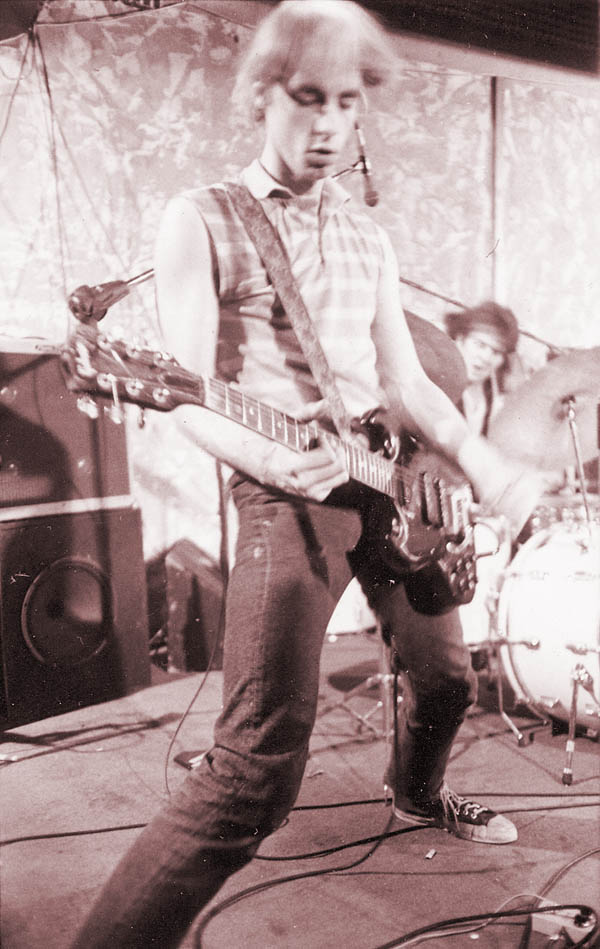
(Above) Greg Sage (Guitar) and Sam Henry (Drums) where you can see Sages MXR Dist+
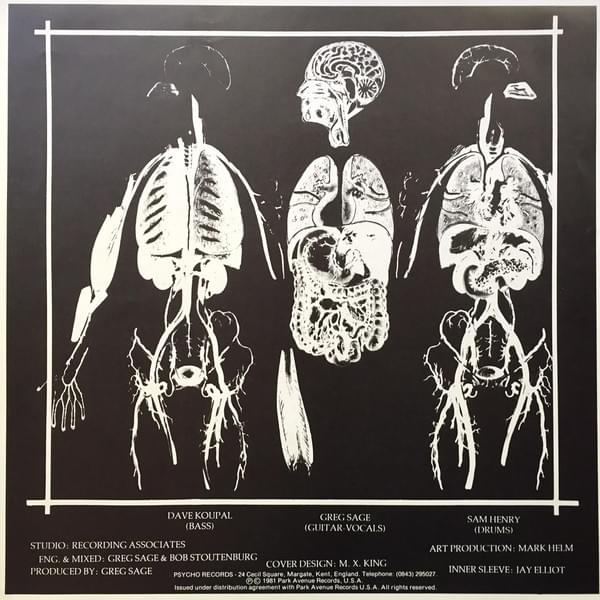
(Above) Liner notes for 'Is This Real?'
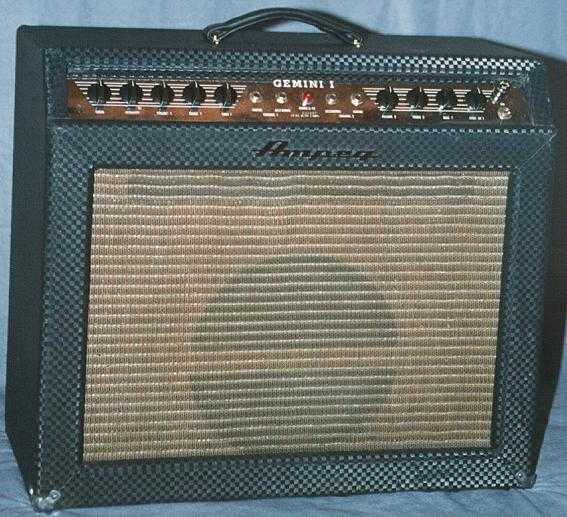
(Above) An ampeg Gemini I (Not Sage's)
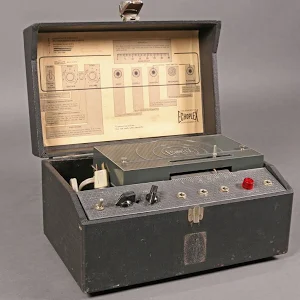
(Above) A Maestro Echoplex (not Sages)
---------------------
Youth Of America LP (1981)
The most likely scenario is that he had the same equipment as he did on Is This Real? An Ampeg Gemini I, a Gibson SG with P-90's and an MXR Distortion+. The production of the official release is very mid-range heavy; it was recorded at an in-home studio, using the Telefunken microphones. I really would love to go into depth but it's truly not that different tonally from 'Is This Real?'
---------------------
Over The Edge LP (1983)
This sound is quite simple. At this point and time Greg stopped using Distortion stomp boxes in live settings, although within this album you can hear 2 different and distinct tones. The high and low gain tones. On Zenorecords Greg Sage had said "Vacuum Tube Distortion Box, This doesn’t look like much, but back in the day this was the only stomp box chassis I could find large enough to put a high voltage power supply in it to power a tube. This design uses a single tube with a distortion circuit. It has a variable distortion control, tone controls and an output volume control, along with a bright switch, and a stomp bypass switch." He started using tube distortion. Now this 'Distortion' sounds more like fuzz. Almost like a heavier Jimi Hendrix. The most comparable would be Germanium fuzz. He used a fuzz pedal as the basis for it and added a tube in place of the original transistor.
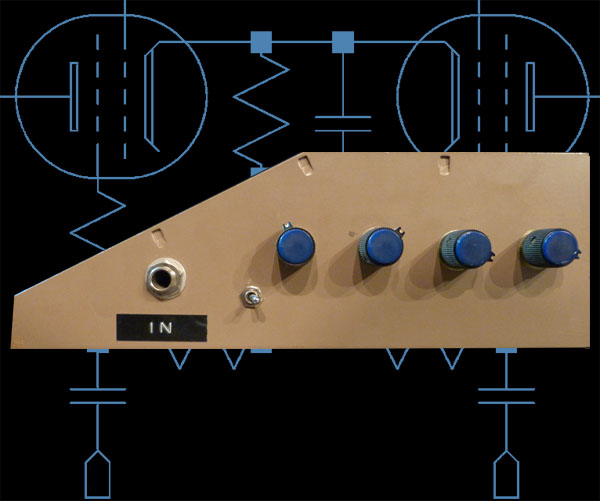
(Above) The tube distortion Greg Sage made.
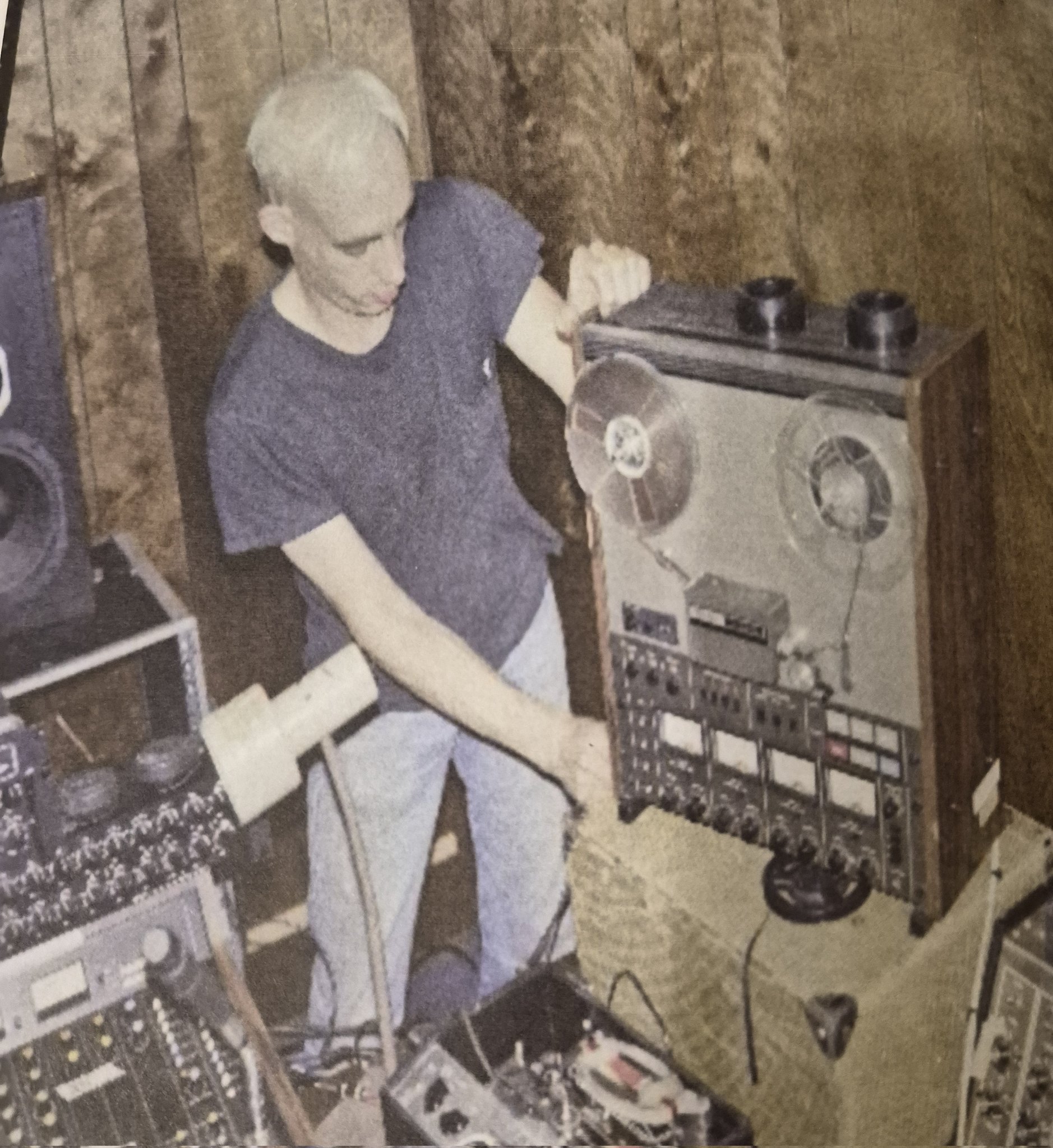
(Above) Photo by Tim Robinson during the recording of Over The Edge, showing Sages Echoplex at the bottom of the image.
---------------------
Wipers Tour '84 (1985)
This is one of two Wipers live show tones I will be talking about. I think the short span of 84-86 is some of the most interesting in Wipers history, as they managed to break up shortly after releasing Over The Edge, release a live album (originally cassette only in 1984) from the tour of Over The Edge, Greg made a solo album almost immediately after the release of this live album and got back together and then release another album, all of which are some of his best work.
Greg used Marshalls on tour usually, usually ones made for metal bands at this time he most likely would have used one, either a Plexi or a JCM800 with his homemade preamp. There were no pedals used on this other than his Echoplex, from what I can tell.
(left to right) A plexi, A JCM800 (neither are Sage's)
---------------------
Straight Ahead LP (1985) (Solo Album)
After Wipers disbanded for the first time, Greg started writing songs on his acoustic guitar (an acoustic Ventura guitar with an electric pickup, perhaps his first guitar. Greg is quoted as saying: "After I recorded Over The Edge, I had $5,000 invested into that record. The record company went bankrupt, so they took the money and started a new label. We got screwed and I had no way of paying back the debt, so that was the end of The Wipers. I was out in the Mohave desert and I wrote a bunch of songs on the acoustic guitar. I fixed a tape recorder for somebody. An eight track recorder, so I got to use it for a month as a fee for fixing it, I guess. I just recorded those songs." Now I've looked high and low for this Ventura acoustic guitar with an electric pickup, and I'd assume it was a Ventura V-14 made in japan, recorded into a tape recorder and based on random guess I'll assume it was a Tascam 48 Reel to Reel. The amp sounds like a Randal of some kind but I'd assume It's just the Ampeg Gemini I.
Another likely scenario is the more realistic. As stated in 'Straight Ahead: The Story of Greg Sage and The Wipers', Greg Sage's first guitar was an acoustic he put an electric pickup on with duct tape, and he'd spend hours playing with feedback. It would be reasonable to believe he didn't buy a new acoustic and mod it. Timing would still lead to the guitar likely being a Ventura V-14 with a pickup taped on, although by this point, he most likely drilled it in.
---------------------
Land Of The Lost LP (1986)
This is where it gets difficult. Up to now I've tried my hardest to be as accurate as I possibly could. I plan on continuing this pattern, although from here until Greg's second solo album, placing their sound is hard. This tone is beefier than the tone on Over The Edge, whether it be due to production or the amp, I'm unsure, I'd assume its the amp and perchance an Ampeg Gemini VT-22. The tone is different enough to imply at least a set of new tubes in his Gemini I. And at risk of sounding like an obsessed mega weirdo (I recognize the irony of saying this on this page) there's a new energy here. This is one of their more dynamic albums, especially of their earlier career. They start their album with a huge chunk of Romeo-esq songs that are high energy, Half of this album would fit perfectly in Over The Edge, the other would fit in The Circle. But the energy here reminds me of when I get new equipment. I just have a hunch that he started using a new amplifier, even though I HATE speculating these things, I believe this is a good guess.
He's still using the Maestro Echoplex and tube distortion at this point.
---------------------
Follow Blind LP (1987)
Greg Sage has said this is his favorite album, I don't blame him honestly. In terms of clean guitar, this might be one of my favorite tones ever. According to Extramusic "Sage's own favorite in his oeuvre, according to a story Rolling Stone did in 2020 on the reissue of "Is This Real?", is " Follow Blind ," released in 1987. By that point, the music had already found its equilibrium: the guitar still sounded like a cutting torch, but Sage's relatively high voice was now channeling itself, stretching out words like strudel dough, in a calm flow from which melancholy increasingly flowed.' which, calling a voice 'like strudel dough' might just be the most German way to describe a voice.
This album sounds like he went back to the Gemini I for the cleans. and it sounds like he ran the distortion at a low gain stage into the echoplex going into the VT-22. It sounds like pedal stacking, in the signal chain I'd assume it went Distortion/Fuzz, MXR Distortion +, Echoplex. He also started playing with guitar layering. You can hear clean guitar under most guitar parts and you can also hear the layering on songs like 'Losers Town' It's a common misconception that he never layered guitars, and this album proves he did. He barely did it in any other album but the intro to 'Losers Town' would be unnecessarily difficult to play without layers, if not even for Greg Sage standards. If attempting to replicate this tone, aim for more low end in your tone. with cleans, (on the Gemini I) Start with Treble on bright and the Bass at around where 6-7 would be on a numbered dial. For distortion use similar settings on the Gemini VT-22, just don't put anything on bright.
Either that, or he just used his Gemini I, which seems reasonable. He may have just put the amp at a higher volume output for the gain.
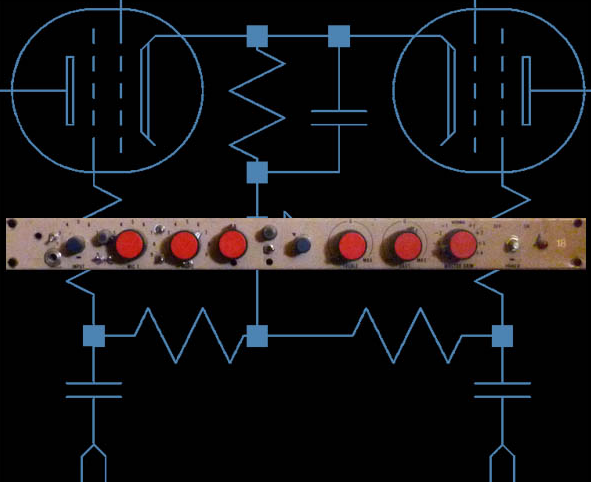
Also on this album is his homemade preamp he made to use while on tour overseas, I believe this may have been the debut of this piece of equipment, Greg never specified when he started using this, but being that the first European show was on September 12th, 1986 and this was the next album after this, it's safe to assume it was not only used on this album, but was used for the first time in studio on this album. It has 3 tubes and 2 inputs, one of which was used for the echoplex, it was most likely used for the rest of his records.
---------------------
The Circle LP (1988)
This is my second favorite tone from Sage. It's ripping, gritty and moody. This tone is very distinct from their other albums, it almost sounds like a zipper, and I believe this is the start of my favorite amplifiers reign within the Wipers, the 1966 Ampeg Portaflex Fliptop B-12X. If you've been checking some of the links I've put in, you'll notice Greg hailed this as his favorite Amp. Source.
The phrasing he used in this was weird. "The sound of this amp is so rich and beefy, no 12ax7’s, It uses hard to find high current tubes that have punch." he said. While this is true, I used to think he meant he replaced the 12AX7's that came with these behemoth amps, but no. The amp comes with different tubes, he does misclass this amp as simply 'B-12' whilst no such amp exists.
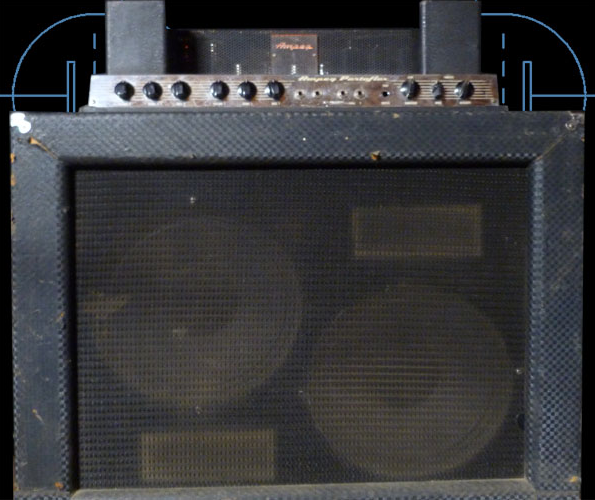
Sage's 1966 Ampeg Portaflex Fliptop B-12X
---------------------
Sacrifice (For Love) LP (Solo Album) (1991)
A very strange turn in Sage's musical career, this album is cleaner and surprisingly polished. The way he most likely recorded this album was by running his SG into his homemade preamp, then running that into a high quality tape machine. Greg, despite being a 'punk' very much cared about the outcome of his albums. Every album sounds very nice in their own distinct way. This album is very well made for sure. But this is starting to sound like a review, let's get on with it, man!!!!
The equipment that we know he used are: his echoplex he modded into a pedal (again using any tape echo works just fine), preamp and a tape machine. He also used a Roland TR-808 drum machine, but as that doesn't matter for his guitar tone, we'll ignore that.
It comes down to the tape machine, which is hard to determine, one thing I do know is that it is for sure a reel-to-reel, most likely a Tascam.
---------------------
Silver Sail LP (1993)
Greg Sage goes Back To The Basics (pun entirely intended).
The majority of the riffs on this album were done on his acoustic, and knowing his devotion to not changing his equipment (even using the same 2 SGs his whole career) I would like to believe he still used his acoustic Ventura with an electric pickup. I do wish we knew the exact one, although I'd guess its a 60s V-14 running into the Ampeg VT-22, no pre-amplification, and the distorted guitar was his SG running into his Tube-op distortion/fuzz, running into the Maestro Echoplex (again, modded into a pedal), into his pre-amp, running into the Ampeg Portaflex Fliptop B-12x. I fully believe his distorted tone always starts with his distortion in the chain.
---------------------
The Herd LP (1996)
This is my favorite Wipers tone- Nay- my favorite guitar tone EVER.
This album (from what I can tell) is almost entirely dependent on his Portaflex Fliptop B-12x. You want almost everything cranked, especially the pre-amp. This is a fuzzier tone than his other albums, and I genuinely think this is his best tone BY FAR.
Greg used his tube distortion, his Maestro Echoplex, his Preamp, and his SG. You want your whole rig blaring, as loud as you can get it.
I've played for a while attempting to make my setup sound like this album, and strangely enough I can get surprisingly close using very similar settings to Follow Blind, Follow Blind has a very similar tone to The Herd, which makes sense as Follow Blind is Greg's favorite album he's released.
---------------------
The Power In One LP (1999)
At the end of the millenia Wipers pumped out their final studio album, The Power in one.
Greg used his Ampeg Portaflex Fliptop B-12x and his Maestro Echoplex. This album has more treble and I think he used the bright function on it, he also has much less gain, which leads me to think he either didn't use his distortion pedal or he had it very low.
---------------------
Live At The Met, December 31, 1982 (2018)
You may be wondering why I put this at the end of the entire list as it is an album recorded at the very tail-end of 1982, but if you look, sure enough this was released in 2018.
For the longest time I hated this tone, although I've warmed up to it. It's the only official Wipers release in an alternate tuning. The entire thing is in E♭ tuning! It's much darker sounding than other Wipers albums, bordering it sounding like 2 basses, Sage was clearly compensating for the mostly treble-heavy Plexi or JCM800 he was using on tour, he probably had his tone knob all the way down, with very little treble on the amp itself, Greg sounds sick and nasally when he speaks on album so I'd assume he had it downtuned accordingly. (listen to that version of 'No Generation Gap' and it becomes apparent that he was sick)
---------------------
---------------------
---------------------
---------------------
Hello, I am Iris, I am a (as of now) 17 year old punk rocker from Maine. My favorite band has been Wipers for a good while and I wanted to make this website with the intention of being as accurate as I possibly could, many issues have shown their ugly fucking heads since I began, mostly from Greg Sage himself. The information on Zenorecords is often misleading or just flat out wrong. I've spent over a year researching this, and a few months gathering what I had discovered into this website. I do believe that this information is as close to accurate as I can get it. Some information I'll have to look into, but I genuinely think I have most of it. A good handful of the information on here may be inaccurate, but I think all the information before Silver Sail is at least 90% accurate.
Follow me on insta! @irishyphema and on twitter @dykemaxing